
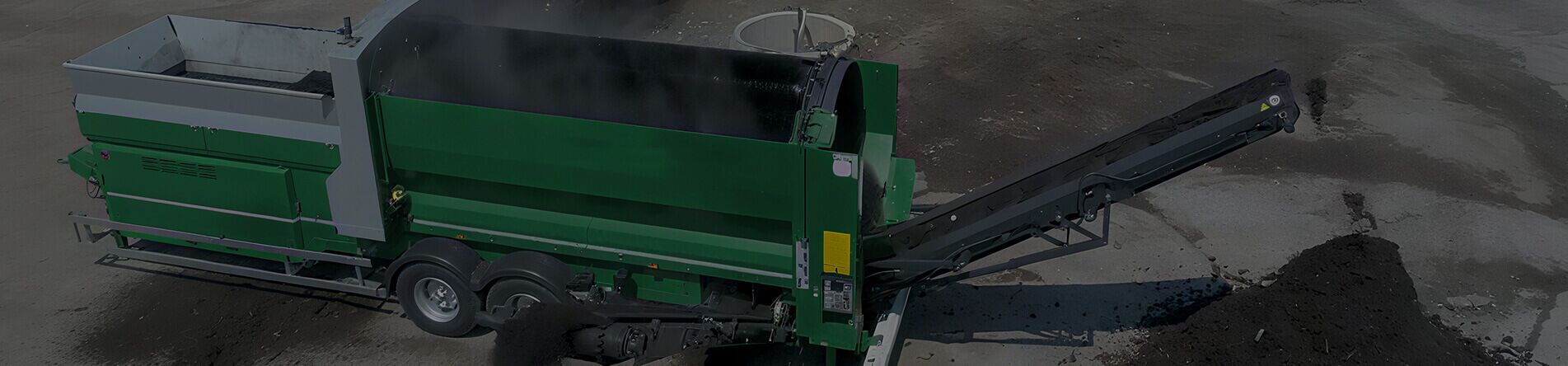
What is a Trommel Screen? An Essential Tool for Material Classification
The Trommel Screen (or Rotary Screen) is a highly efficient and reliable piece of mechanical equipment designed for the separation and classification of materials based solely on their size. At its core, the system utilizes a rotating, slightly inclined cylindrical mesh drum. As materials are fed into this drum, the tumbling action and the precise apertures of the mesh allow finer particles, such as soil or sand, to fall through and be efficiently collected by an underlying conveyor system. Simultaneously, larger materials are retained, flowing toward the end of the trommel where they are discharged into a separate collection area. [Watch a trommel in action below!]
The trommel screen operates under alternative names, such as the drum screen or cylindrical drum screener . This design offers a significant functional advantage over flat-deck screening equipment.
As the cylindrical drum rotates, the material inside is repeatedly lifted and dropped. This constant agitation is key: it effectively breaks up clumps and agglomerations, simultaneously exposing more surface area of the material to the mesh screens. This action dramatically improves screening efficiency, making trommel machines particularly ideal for processing wet or sticky materials where conventional deck screeners frequently struggle with clogging or blinding of the screen openings. The self-cleaning nature of the tumbling material ensures continuous, high-volume throughput.
So, what is a trommel used for? Trommel screens excel in material separation across numerous critical industries. They are the first choice for screening a wide range of materials, particularly proving indispensable when dealing with wet, sticky, and organic substances.
The primary materials efficiently processed by trommels include:
1. Soil and Sand
2. Compost and Mulch
3. Wood Pellets and Chips
4. Domestic Waste (Municipal Solid Waste)
The robustness and self-cleaning ability of the trommel make it crucial for continuous operation in challenging environments:
5. Waste Management: They are widely employed to separate mixed components within municipal solid waste (MSW) and recycling streams.
6. Landscaping and Construction: Landscaping yards utilize trommels to produce clean topsoil and specific mulch fractions.
7. Demolition and Recovery: In processing demolition waste piles, trommels effectively remove contaminants and recover valuable, sellable fines (smaller particles), enhancing material recovery efforts.

Material is fed into the elevated end of the rotating drum. As the drum turns, gravity and rotation cause the material to tumble. Smaller particles fall through the screen apertures onto a collection conveyor or pile beneath, while larger pieces exit at the drum’s lower end. This process efficiently sorts materials based on size.
Throughput depends on trommel size, aperture, feed rate, and moisture content. Operators balance drum speed and inclination to maximize fines capture while keeping larger pieces moving toward the end of the drum.
The separation process begins with the Load Hopper . Mixed material is first fed into this hopper, which is typically attached to a conveyor that slowly and steadily moves the material into the elevated end of the trommel drum.
The speed at which the hopper feeds the material is crucial for the separation of valuable fines. While feeding material quickly might seem efficient, every trommel has a defined loading capacity—normally restricted to about 40% of the drum’s width. If the drum is overfilled, the valuable fines won’t have enough time to settle and pass through the screen, resulting in their “carryover” with the larger materials. This inefficiency would necessitate costly reprocessing of the entire batch.
To prevent this, most modern machines feature variable-speed controls on the feed hopper. Operators use these controls to dial in a steady, even curtain of material into the trommel. This controlled flow is essential as it improves particle size stratification within the drum, ensuring maximum fines capture and significantly reducing the costly carryover of fine particles into the overs pile.

Once the mixed material moves from the hopper into the elevated end of the drum, the actual trommel screening begins. As the drum rotates, the material is tumbled, which helps to mix air into the feed, promoting a drying effect on any wet or sticky substances—a crucial factor that significantly improves separation.
The continuous dragging and dropping motion created as the material is pulled up the side of the drum is key; it helps break up large lumps and ensures the valuable fines are exposed and allowed to pass through the mesh.
Operational problems can arise if the trommel drum isn’t spinning fast enough. This can cause the material to sit stagnant on the bottom, leading to “balling”—where stones collect and bind wet materials together into large, solid clumps. The screened material (fines) is then passed onto a lower conveyor, which carries it away to a separate stockpile.
If operators observe persistent balling or clogging, the solution is typically to slightly increase the drum speed or to install lift-and-cut bars within the drum to aggressively agitate the material bed. Furthermore, matching the mesh aperture size precisely to your target particle size distribution is vital; it directly increases screening efficiency and minimizes the need for costly reprocessing.

A critical operational factor that dictates separation time is the trommel’s angle of inclination. While trommels are typically operated at an angle of five degrees, this can—and should—be dynamically changed based on the material’s type and moisture content.
Dry, Free-Flowing Materials: For substances like dry sand or free-flowing aggregates, a steeper angle is preferable. This increased angle speeds the material through the drum, minimizing retention time. Since most fines are quickly removed near the top, a steeper angle increases production and throughput without sacrificing much efficiency.
Wet, Sticky Materials: For sticky feeds like compost or wet wood chips, a shallower angle is required. Shallow angles keep the material in the drum for a longer duration, providing the necessary time for the persistent tumbling action to break up clumps and allow the challenging fines to separate.
Operators strategically adjust this angle to balance the need for maximum retention on sticky feeds with the desire for maximum throughput on dry materials.
What size trommel screen should I choose?
The answer depends primarily on the required throughput and site mobility, as trommels come in a vast range of sizes and configurations.
The spectrum ranges from small, highly portable, compact screeners ideal for job sites with limited space, up to massive, static trommels built for high-volume, continuous production.
Significantly, these larger trommels offer advanced functionality. They are capable of screening and separating three or four different-sized materials simultaneously . This capability is achieved by installing different mesh sizes along the length of the drum. As the material progresses, it passes through increasingly smaller or larger apertures, allowing for precise, multi-stage material classification in a single continuous process.

Choosing the right trommel requires balancing your material characteristics, required output, and available space.
The size of the drum—its length and width—is dictated by several factors: the material’s wetness, type, total volume, and your target product.
Wet Materials: Wet or sticky materials demand a longer retention time for proper separation. In these cases, a longer and wider trommel is best. Longer drums inherently increase retention time, which helps liberate fines in sticky feeds. Wider drums, meanwhile, increase capacity and reduce the risk of overfilling.
Dry Materials: Drier materials that separate easily can be screened efficiently in a smaller drum.
Configuration: Compact tow-behind units are excellent for contractors moving between jobs, while high-capacity tracked trommel machines are superior for soil yards or landfill diversion sites requiring continuous throughput and multiple stockpiles.
The mesh size—the size of the hole—controls the size of the material that passes through. Aperture sizes can range dramatically (e.g., from 1/20” to 5” wide). The best practice is to start with the smallest aperture that still delivers your target production rate. While wire mesh is common, punch plate is often preferred in applications where abrasion is high or contaminants might tear wire screens. (See what is screening media).
For companies with smaller yards or urban operations, space is a major constraint. In this case, a compact trommel is the best choice. Specify fold-out conveyors to maximize stockpile height in tight yards and reduce the number of times a loader has to move material.
Not sure which trommel is right for you? SINOTECH® has a team of material experts who can help match you with the perfect machine to suit your needs and budget. If you are balancing trommel size, mesh sizes, and budget, our team can model your mix of aggregates, mulch, and compost to recommend the right cylindrical drum length and feed controls.
Trommels stand out as exceptionally versatile mechanical separators, finding essential roles across multiple sectors. They are mainly deployed when the material is wet and sticky—a challenging consistency that would quickly blind conventional screeners, making them ideal for substances like compost.
The principal applications of trommels include:
Composting: They are crucial for separating fine, mature compost from larger organic matter (overs) that requires further processing.
Construction: Trommels screen and classify soil, sand, and gravel into specific grades required for various building and infrastructure projects.
Agriculture: They assist in cleaning and sizing grains or seeds to ensure quality control and uniformity.
C&D Recycling (Construction & Demolition): They are often paired with shredders to effectively size demolition waste and remove contaminants, enabling material recovery.
Landfill Diversion: By recovering valuable fines (smaller particles) from mixed waste loads, trommels help businesses reduce disposal fees and minimize waste sent to landfills.
Landscaping: Operators use them to efficiently produce clean topsoil and mulch in different, uniform sizes for retail sales and professional use.
Screening—a process much like using a large sieve—is fundamental to optimizing material value and efficiency. It is used to separate mixed aggregates, such as rock and soil, into standardized, different-sized products.
Agriculture and Farming: Screening is vital for separating valuable products, such as topsoil, from unwanted, larger materials. Since topsoil contains the essential nutrients for plant growth and its small particle size allows water to drain freely (preventing root rot), screened soil can be used on-site or even sold for a profit. Generally, the finer the topsoil is screened, the higher the market price.
Contractors and Construction: For contractors, screening directly benefits the bottom line by reducing trucking costs, increasing valuable on-site reuse of materials, and creating sellable by-products.
A well-calibrated trommel takes these general benefits further by improving screening efficiency and stabilizing production, even when moisture content fluctuates. The specific advantages include:
Efficiency: Trommels process large volumes quickly, saving time and labor costs.
Versatility: They handle a wide range of materials, excelling with both wet and dry feeds.
Low Maintenance: Their simple design, with fewer wear parts than comparable equipment, reduces upkeep and downtime.
Cost-Effective: They reduce the need for multiple machines by performing several functions simultaneously.
Consistency: They produce uniform fines and clean overs, which is essential for improving downstream blending and maintaining overall quality control.

Construction sites that generate significant concrete waste can realize substantial benefits by prioritizing on-site recycling and screening. This process transforms an expensive waste stream into valuable, reusable materials.
Specifically, the resulting separated concrete sand, composed of resilient granite and limestone, becomes a highly sought-after product. It can be utilized for fill and bedding in various structures, including pavements and roads. This screened material is an ideal structural base because it actively promotes water drainage, thereby stabilizing the overall structure.
Recycling and screening your waste concrete aggregate offers immediate financial and environmental returns:
It helps reduce the number of trucks traveling to landfills, directly lowering the costs associated with the transport and disposal of waste.
It significantly increases your bottom line as you can sell the profitable fines and reused aggregate.
Want to find out how you could make money recycling concrete? Check out our blog post here.
If you are processing concrete alongside soil or other aggregates, consider installing a magnet over the overs conveyor. This simple step is vital for removing rebar and other metal contaminants before they can damage the valuable mesh screens or carry into the final material stockpiles.
Trommels can be customized depending on your needs. Below are a few examples of how trommels can be modified:
The mesh is designed to be easily replaceable on most trommel drums, giving operators the flexibility to quickly change the size of the final product they produce.
To actively combat the “balling” of wet and sticky materials, Lift and Cut Bars can be bolted to the inside of the drum. These bars create a continuous dragging and dropping motion that prevents clumps from forming, ensuring a consistent flow of fines through the mesh.
When choosing a trommel, a fundamental decision is between mobile (portable) and static (fixed) configurations.
Mobile Systems (Tracks and Tires)
Most trommels are designed as mobile units, coming equipped with either rubber tires or tracks. Towable units (tires) are perfect for contractors moving quickly between job sites that require fast setup. Tracked mobility is preferred for extremely rough or muddy ground, as tracks add superior traction and ensure even weight distribution.
Static Systems
Conversely, a static trommel system is built as a permanent fixture at a site—such as a large quarry or a high-volume processing plant. These systems prioritize maximum throughput, larger capacity, and deeper integration into a permanent processing line, often foregoing the need for portability in favor of robust, continuous operation at a single location.
The final choice dictates whether a project prioritizes flexibility across multiple locations (mobile) or continuous, high-volume production at one site (static).
Before material even enters the trommel drum, a Grizzly often serves as the first line of defense. A grizzly is essentially a set of large bars placed across the infeed of the hopper, designed to remove unwanted heavy and oversized materials.
Typically used in rock and gravel screening, grizzlies sort out large rocks or debris that could otherwise enter and damage the fine trommel mesh or even the drum itself. The bars are usually angled so that the heavy, oversized materials simply slide or fall off the side of the machine.
To maintain continuous flow and prevent bottlenecks, grizzlies can come equipped with hydraulic cylinders to lift and dump any material that has piled on top. A vibrating or hydraulic tipping grizzly actively prevents oversized material from “bridging” (clogging), effectively protecting the trommel drum and keeping your screening machine running smoothly.
During the screening process, materials that are too wet or sticky can easily clog inside the mesh apertures. To combat this, stiff-bristled brushes (often called trommel boom brushes) are installed, typically positioned on top of the drum.
These brushes continuously clean the mesh as it rotates, keeping it free from dirt and caked debris. Maintaining these brushes is critical to ensuring consistent screening quality and maximizing open screen area.
Operators must adjust the brush tension seasonally or as material conditions change. Applying too much pressure will accelerate mesh wear and tear, requiring premature replacement. Conversely, too little pressure allows fines to cake and reduces the effective screening area, decreasing efficiency. Finding the right tension is key to stable performance.
These trommels feature a large spiral that is able to control the flow of material through the drum. This design also improves screening and leads to a more even product. The addition of the spiral, however, increases the cost of these drums, and it is not possible to replace parts of the drum if it gets damaged.
Use spirals where you need precise retention times and consistent residence across changing feed conditions.

High-pressured water jets can be added to the drum for certain uses, such as gold mining. Jets can help break apart large lumps of clay and mud to remove them from the valuable gold. Dust suppression systems can also be added to the inlet and outlets of trommels to help meet health and safety requirements.
Misting at transfer points reduces dust around conveyors and protects operators and neighbors on urban sites.
These can be added to the trommel drum to remove unwanted ferrous or magnetic materials from the screened product. This is a perfect addition for those who screen on construction or demolition sites.
Over-belt magnets on the fines conveyor keep your product clean and prevent damage to downstream equipment.
When selecting a trommel, consider:
Also consider power source, noise limits, dust requirements, and site access.

SINOTECH® offers a comprehensive range of screeners, including trommels for sale. Our team of highly experienced screening experts can help you choose the best trommel for your specific needs and budget. Contact us today to speak directly with one of our material experts. We also supply an extensive selection of equipment, from crushers to screeners, to suit every budget and application.
1. What is a trommel used for?
Trommel screens are used to separate materials by size. They’re highly effective for screening topsoil, compost, mulch, sand, gravel, and even construction waste. The rotating drum allows fine materials to fall through while larger materials move down the barrel.
Trommels excel with sticky or clumpy materials that might blind flat screens, making them the ideal choice for organic or moist material processing.
2. How is a trommel different from a deck screener?
Trommel Screens: Rotate material through a cylindrical drum, making them perfect for wet, sticky, or clumpy material.
Deck Screeners: Shake material over flat screens, making them more efficient for dry or gravel-heavy loads.
Trommels are slower but more forgiving when dealing with moisture and organic content. Many operations use both: a trommel for wet feeds and a deck screener for dry aggregates.
3. Can a trommel screen wet material?
Yes! One of the main benefits of a trommel is its ability to process wet materials like topsoil, compost, and mulch without clogging, which often happens with flat deck screens.
Trommels feature lift-and-cut bars and brushes that help reduce clogging and maintain open apertures for efficient screening.
4. How much material can a trommel process per hour?
Production rates vary by model and material type:
Smaller models: 50–100 cubic yards per hour
Larger units (e.g., WTS1860): Up to 300 tons per hour, depending on material density and moisture content.
Actual throughput will depend on factors like feed gradation, moisture levels, and mesh sizes.
5. What size trommel do I need?
Choosing the right size depends on:
Material volume: Compact trommels are ideal for smaller job sites, while larger models are suited for high-volume jobs like composting or soil yards.
Mobility: Compact models are great for contractors who need portability.
Consider your future needs. Opting for a slightly larger drum or more horsepower now can save you from costly upgrades down the line.
6. Can I move a trommel between job sites?
Yes! Many trommels are towable or track-mounted for easy transport. Portable models can be set up and running in under an hour, perfect for contractors who need flexibility.
Before moving, check transport width and height for road compliance.
7. Do trommel screens require a lot of maintenance?
Trommels have fewer moving parts compared to other screening systems, meaning they require less maintenance. Regular cleaning and checking drum tension are usually sufficient to keep your trommel in optimal working condition.
We recommend keeping spare brush segments, a backup mesh panel, and belt repair kits to minimize downtime.
Every machine is backed by our comprehensive warranty, lifetime online technical guidance, and worldwide spare parts ready to ship.


